

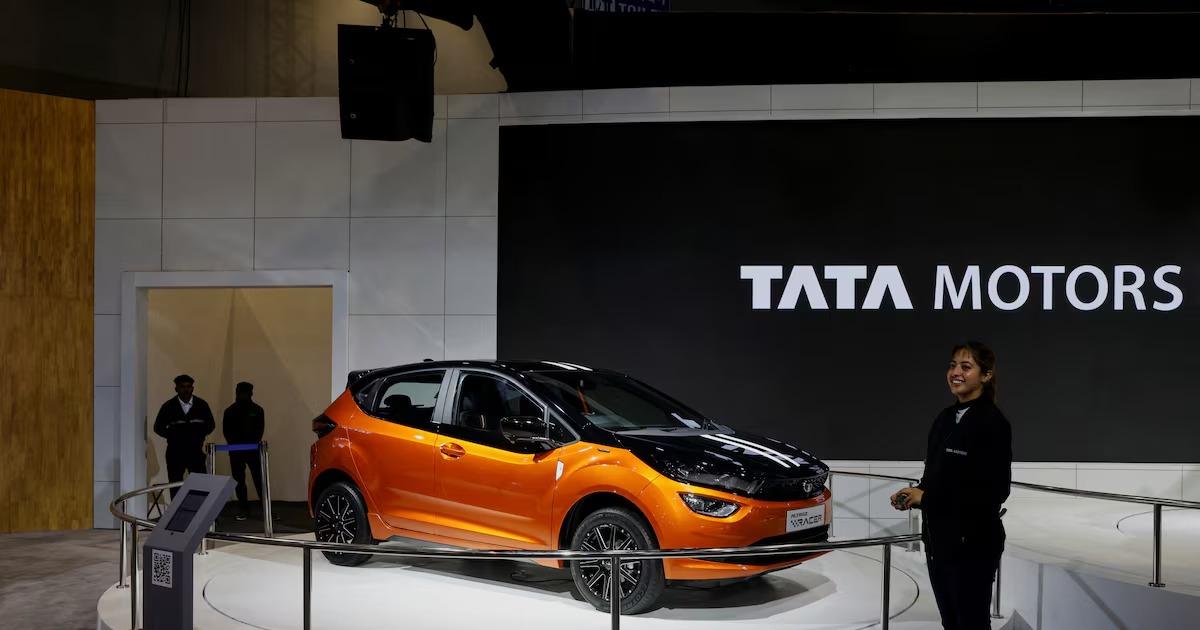
Tata Motors has significantly outpaced competitors in the passenger vehicle market during the second half of FY25, capitalising on a GST rate cut and strategic product initiatives to achieve remarkable growth and overtake Mahindra & Mahindra in sales volumes.
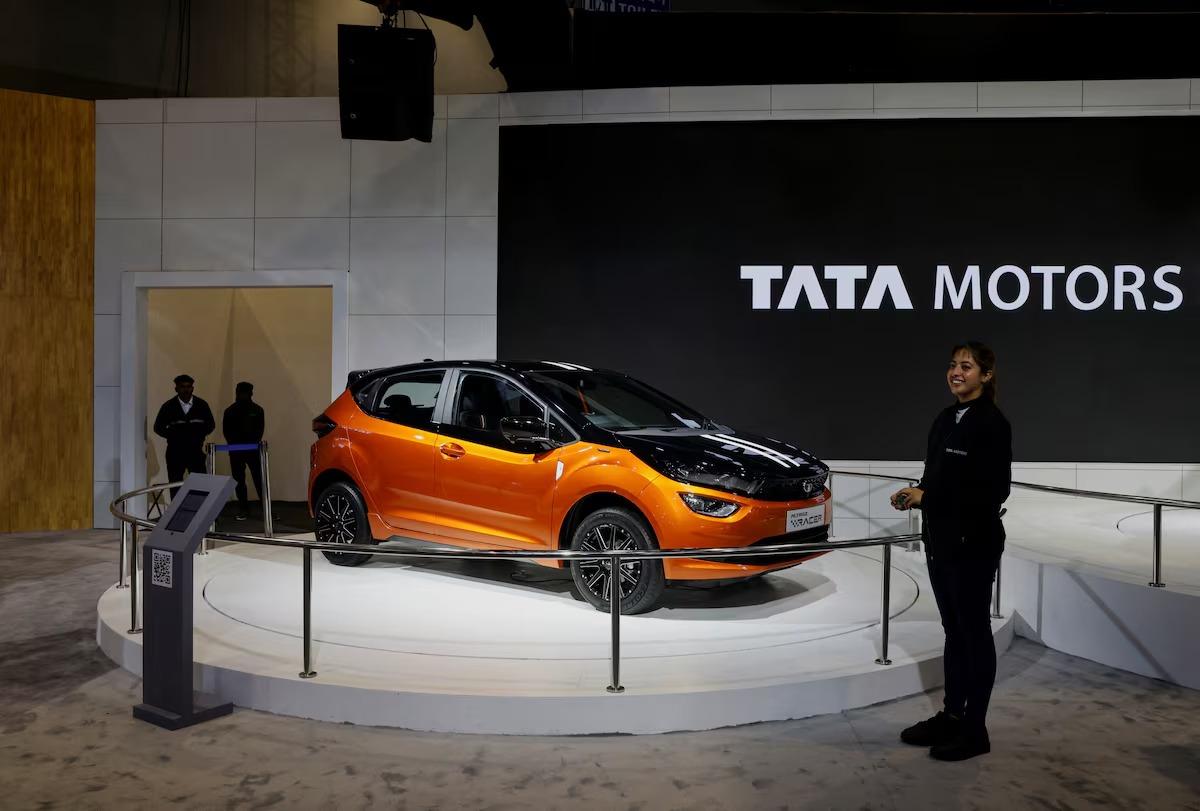
Photograph: Anushree Fadnavis/Reuters
Key Points
- Tata Motors recorded a 108.96 per cent surge in wholesales and 109.63 per cent rise in retail volumes in H2 FY25, making it the biggest gainer post-GST rate cut.
- The company surpassed Mahindra & Mahindra in volumes, becoming the second-largest PV player in H2 FY25, behind Maruti Suzuki.
- Tata Motors’ multi-powertrain strategy, including ICE, CNG, and EVs, along with strategic product launches and facelifts, contributed significantly to its market outperformance.
- Key launches like the Sierra reintroduction and Punch facelift, alongside petrol variants for Harrier and Safari, expanded its market appeal across segments.
- The overall industry rebounded strongly in H2 FY25 due to price corrections, improved affordability, and pent-up demand following the tax cut.
Tata Motors emerged as the biggest gainer in the passenger vehicles (PV) market in the second half of FY25 following the goods and services tax (GST) rate cut in September.
The auto giant delivered the highest growth among major original equipment manufacturers (OEMs) during that period, overtaking Mahindra & Mahindra (M&M) in volumes.
Industry data comparing April–August (H1) with September–March (H2) shows Tata Motors’ wholesales surged 108.96 per cent to 427,026 units from 204,361 units in the first half.
Retail performance mirrored this trajectory, with Vahan registrations rising 109.63 per cent to 414,151 units.
This was the strongest growth for Tata Motors, significantly ahead of peers such as Maruti Suzuki and M&M.
Competitive Landscape and Market Shift
Maruti Suzuki posted a 75.14 per cent rise in wholesales and a sharper 91.77 per cent rise in retail volumes, while M&M recorded growth of 73.59 per cent and 74.13 per cent, respectively.
Hyundai, Toyota and Kia saw relatively moderate recoveries, with wholesales growth between 64 and 67 per cent, indicating a more measured response to the demand stimulus triggered by the GST rate revision.
The industry rebounded strongly in the second half, aided by price corrections following the tax cut, improved affordability, and pent-up demand.
The firm’s surge also translated into a shift in competitive positioning.
With 427,026 units sold in H2FY26, Tata Motors moved ahead of M&M’s 418,939 units, becoming the second-largest PV player during the period after Maruti Suzuki.
Strategic Levers for Outperformance
Tata Motors attributes this outperformance to a focused product and powertrain strategy.
“Our strong growth is a result of deliberately scaling on clear strategic levers — winning in high-growth segments with category-leading products, democratising choice through smart variants and multiple powertrains, and continuously energising our portfolio with compelling new launches,” said Shailesh Chandra, managing director and chief executive officer, Tata Motors Passenger Vehicles.
He added that the company’s leadership in electric vehicles, strong outperformance in compressed natural gas, and steady growth in hatchbacks, along with the rising popularity of key nameplates, underpinned the momentum.
The automaker’s multi-powertrain strategy — spanning internal combustion engines, CNG, and EVs — appears to have positioned it well to capture incremental demand in a price-sensitive market following the GST changes, said a Mumbai-based analyst.
Product Push and Future Outlook
Tata Motors’ strong H2FY26 performance coincided with an aggressive product push spanning new launches, facelifts and powertrain expansion, enabling it to capture demand across segments and price points.
Reintroduction of the Sierra in November 2025 marked its entry into the highly-competitive mid-size SUV space, positioning it against established vehicles like Hyundai Creta and Kia Seltos.
At the mass end, the Punch facelift in January 2026 — along with continued petrol and CNG options — helped sustain momentum in the high-volume entry SUV segment.
Crucially, the rollout of petrol variants in the Harrier and Safari during November–December 2025 expanded their appeal beyond diesel buyers.
Alongside this, updates to EV offerings such as the Punch EV facelift in February 2026 and earlier launches like the Harrier EV in June 2025 reinforced Tata Motors’ multi-powertrain strategy, spanning internal combustion engine (ICE), CNG and electric vehicles.