


The Reserve Bank of India strategically net-bought $7.4 billion in the spot foreign exchange market in February, its largest purchase since March 2025, just before the rupee faced significant pressure and a 4 per cent decline in March due to rising crude oil prices.
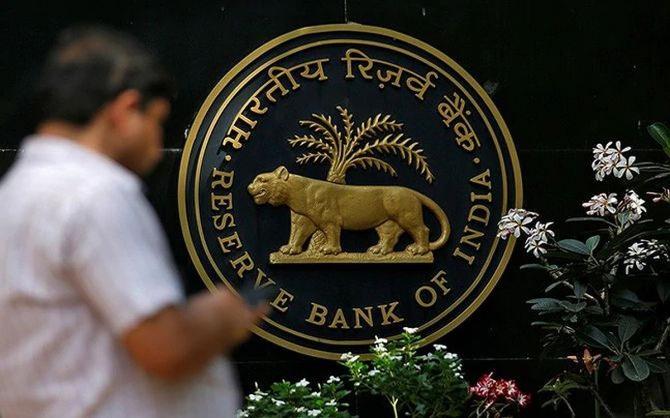
Photograph: Danish Siddiqui/Reuters
Key Points
- The RBI net-bought $7.4 billion in February, marking its highest spot foreign exchange purchase since March 2025.
- In March, the RBI heavily intervened by selling dollars to counter a more than 4 per cent decline in the rupee, triggered by rising crude oil prices.
- The rupee’s Real Effective Exchange Rate (REER) further decreased to 92.72 in March from 93.99 in February, indicating a potential loss of export competitiveness.
- A significant portion of the RBI’s spot dollar purchases in February was driven by the maturity and unwinding of earlier short forward contracts.
- The RBI’s outstanding net short dollar position in the rupee forward market reached $77.67 billion by the end of February, the highest since March 2025.
Just before the West Asia conflict started, the Reserve Bank of India (RBI) net-bought $7.4 billion from the spot foreign exchange market in February, its highest buy since March 2025, according to the central bank’s monthly bulletin.
It heavily intervened in the foreign exchange market by selling dollars in March as the rupee came under pressure, declining over 4 per cent following a spike in crude oil prices.
During the reported month, the RBI bought $21.4 billion, while it sold $13.99 billion.
The central bank had net purchased $2.53 billion in January.
Rupee’s Real Effective Exchange Rate Declines
Meanwhile, the rupee’s Real Effective Exchange Rate (REER) fell further to 92.72, against 93.99 in February.
The REER adjusts the Nominal Effective Exchange Rate (NEER) to account for inflation differentials between India and its major trading partners.
A REER value above 100 indicates an appreciation of the rupee relative to the base year, potentially making Indian exports less competitive in global markets.
RBI’s Forward Book Management
Market participants said the data largely reflected the unwinding and rollover of RBI’s forward book.
They said the central bank had earlier built significant short forward positions, which began maturing during the month, necessitating spot dollar purchases as part of its intervention strategy.
Some of these purchases were also aimed at cancelling forward positions.
“A significant part of the buying was driven by the maturity of earlier forward contracts, where the central bank had to take delivery in the spot market.
“Additionally, some positions were squared off to manage the existing forward book,” said a market participant.
Rising Net Short Dollar Position
RBI’s outstanding net short dollar position in the rupee forward market rose to $77.67 billion by the end of February, the highest since March 2025.
The net short position by the end of January stood at $67.78 billion.
The central bank’s short position in less than one year remained unchanged at $28 billion, while in longer than one year tenure it rose by around $9 billion to $49 billion.
Of the $77 billion net short dollar position, $10.95 billion was in onemonth contracts and $5.9 billion was in one- to three-month tenures.
Another $11.7 billion position was set to mature between three months and a year, and the remaining $49 billion was in a contract with tenure greater than a year.
Outlook on RBI’s Operations
While there is a strong likelihood that RBI may have turned a net seller in March to support the rupee amid volatility, dealers cautioned that its operations are typically two-sided and not strictly directional.
The rupee has remained under pressure despite a softer dollar index and relative stability in peer currencies such as the Chinese yuan, pointing to persistent foreign institutional investor (FII) outflows.