


The data from Clearing Corporation of India shows that HDFC Bank raised Rs 450 crore at 7.01 per cent in one-year money, while IndusInd Bank borrowed Rs 1,075 crore at 7.49 per cent for the same tenor.
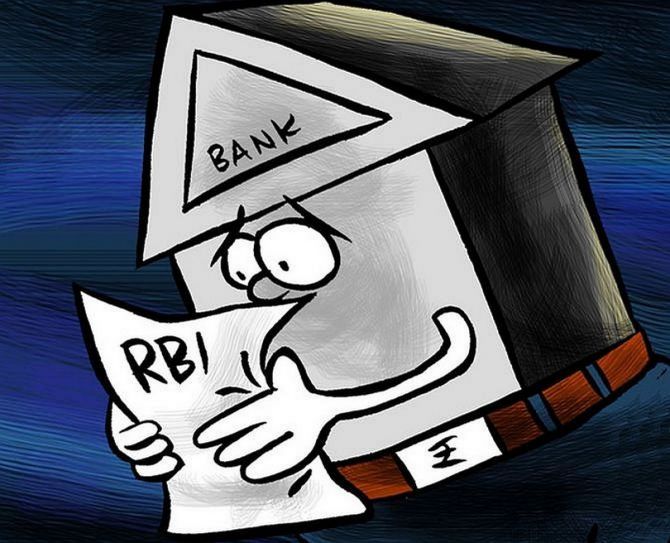
Illustration: Uttam Ghosh
ICICI Bank raised Rs 2,685 crore at 6.95 per cent.
Key Points
- Banks have increasingly resorted to CDs
- Banks may also increasingly tap bulk deposits outside the CD market
- CD rates would stay elevated unless the RBI introduced liquidity-boosting measures
- India’s bilateral trade in goods with the EU was $136.53 billion in 2024-25
Banks are depending more heavily on the market for certificates of deposit (CDs), whose worth climbed to a record Rs 5.75 trillion in the fortnight to January 15, owing to deposit tightness in the system.
Deposit growth among banks is lagging credit expansion by roughly 180 basis points.
CD rates have hardened, with marquee banks, including HDFC Bank and IndusInd Bank, borrowing at over 7 per cent in one-year paper.
The data from Clearing Corporation of India shows that HDFC Bank raised Rs 450 crore at 7.01 per cent in one-year money, while IndusInd Bank borrowed Rs 1,075 crore at 7.49 per cent for the same tenor.
ICICI Bank raised Rs 2,685 crore at 6.95 per cent.
Though the Reserve Bank of India (RBI) data shows the outstanding CDs in the market topped Rs 5.75 trillion, a record high, issuance during the fortnight (January 31) more than halved to Rs 40,189 crore from Rs 88,512 crore in the fortnight ended December 31 — the second-highest amount raised in a fortnight ever — due to elevated rates.
Banks have increasingly resorted to CDs, with lenders issuing instruments of over Rs 3.77 trillion in the last six fortnights.
Issues started picking up since mid-September due to the cumulative effects of rationalisation in goods and services tax and rate cuts by the RBI.
According to the latest Reserve Bank of India (RBI) data, in the fortnight ended December 31, credit growth stood at 14.5 per cent and deposit increase 12.7 per cent.
“Rates of commercial paper and CDs have firmed up despite a policy-rate cut due to tight liquidity.
“In this environment, banks may also increasingly tap bulk deposits outside the CD market,” said Anil Gupta, senior vice-president and co-group head (financial sector ratings), Icra.
Additionally, he said CD rates would stay elevated unless the RBI introduced liquidity-boosting measures, which is what the central bank did on Friday.
RBI’s liquidity measures
The RBI, on Friday, announced liquidity measures through open-market operations (OMOs), dollar-rupee buy-sell swaps, and the long-term variable rate repo (VRR) instrument. OMOs will involve the purchase of Government of India securities worth Rs 1 trillion in two tranches of Rs 50,000 crore each on February 5 and February 12.
A 90-day VRR auction for Rs 25,000 crore will be conducted on January 30.
Additionally, a dollar-rupee buy-sell swap for $10 billion for three years will be held on February 4.
The central bank said the decision was taken after reviewing the liquidity and financial conditions, adding that it would take measures to ensure orderly liquidity conditions.
“Indian banks have increasingly begun resorting to short-term CDs, largely in the segment of one-three months and going up to one year, with one-year CD yields rising to as high as 7.49 per cent.
“This points to a growing dependence on rollover funding at a time when system liquidity is only adequate and not in surplus.
“In the absence of excess liquidity to ease short-term rates, CD yields have hardened sharply, forcing banks to borrow at elevated costs even for short maturities,” said Venkatakrishnan Srinivasan, founder and managing partner, Rockfort Fincap LLP.
“This rising dependence on short-term CDs is cause for concern because it heightens refinancing risk and signals pressure on liability management amid strong credit growth and relatively slow deposit accretion,” he added.
How CDs are rated
CDs are rated by approved rating agencies, and this enhances their tradability in the secondary market based on demand.
Banks rely on CDs primarily because they offer multiple benefits, including trading opportunities, liquidity management, and addressing maturity gaps.
Banks are expected to increasingly depend on wholesale deposits to fund credit growth, potentially pushing up the outstanding stock of CDs.
What experts say
However, experts noted the limitations of the CD market, where mutual funds are the dominant investors.
With corporate issuers offering more attractive rates in the three- and six-month CP market, a significant share of mutual fund flows is being diverted there instead of into CDs.