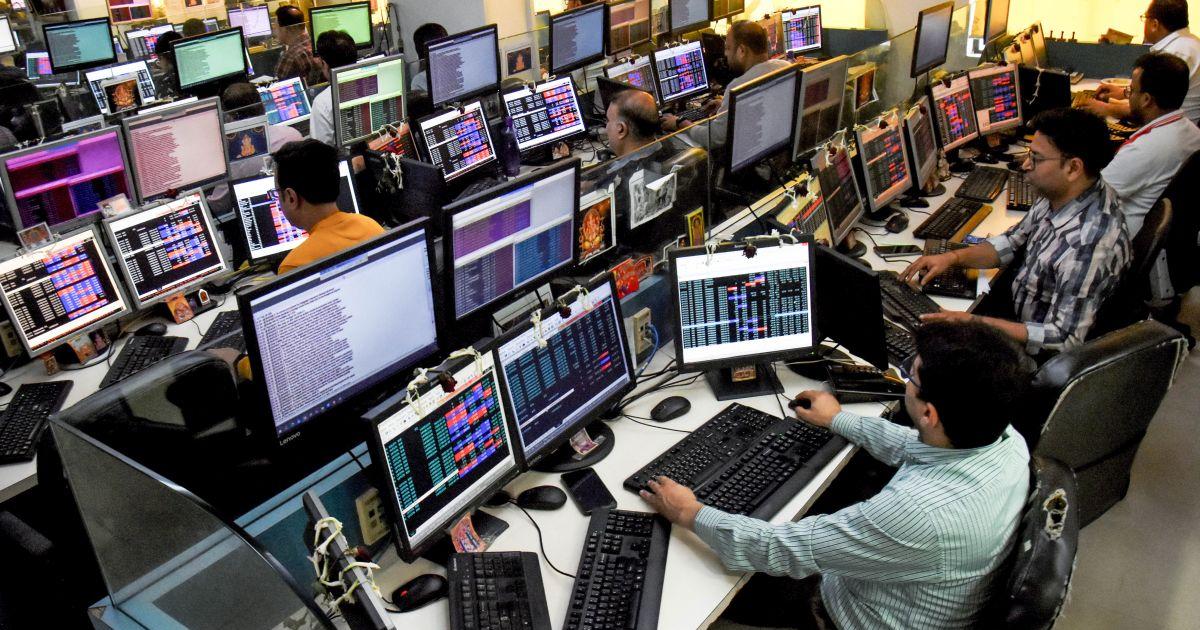


While he acknowledged initial unease around capital market changes—particularly the securities transaction tax and its potential market impact—he noted that steps such as buyback relief provided some support to retail investors, even as the data centre push clearly dominated the overall Budget narrative.
Finance Minister Nirmala Sitharaman in her Budget 2026 speech said the government proposes to offer a tax holiday until 2047 for foreign companies that provide cloud services globally using data centre
infrastructure based in India. Such companies, however, will be required to serve Indian customers through an Indian reseller entity.
Also Read | India data centre buildout may need $70–80 billion by 2030 as AI and cloud demand rises
According to Agrawal, “The data centres tax benefit for next 22 years. That’s the key highlight, because data centre is the biggest infra build all over – like running into trillions of dollars, and we were not participating at that force. Now with this, it looks that doors are open for the artificial intelligence (AI), the impact of AI coming into India, and we want to make India as an AI factory of the world.”
With this move, India could attract AI-led investments, similar to how software exports boomed in the 1990s after tax incentives.
Agrawal pointed out that India has several advantages, including low-cost power, relatively cheaper infrastructure, and a large talent base. The policy could also trigger demand across sectors such as air-conditioning, cables, construction, and real estate, leading to big-ticket capital expenditure projects over time.
While some questions remain around data sovereignty and whether global tech companies will locate data centres in India, Agrawal said there are many regions outside the US and Europe that could rely on India for data centre services, including parts of Asia and the Middle East. He added that policy fine-tuning on taxation and structure could follow over time.
Global technology companies have also welcomed the policy direction. Microsoft said the Budget’s long-term policy certainty for data centres, cloud and artificial intelligence infrastructure recognises digital capacity as strategic national infrastructure. Microsoft has announced a commitment of $20 billion towards expanding data centre investments in India, aligning with the government’s push to scale up artificial intelligence and digital infrastructure.
“The Union Budget 2026 sets a clear direction for India’s next phase of growth, with AI, digital infrastructure, and services positioned as central to national progress. By placing AI at the heart of economic and governance priorities, the Government has signalled its commitment to building a more productive, competitive, and technology‑led economy,” said Puneet Chandok, President, Microsoft India & South Asia.
On capital markets, Agrawal was more cautious. He admitted that the proposed hike in securities transaction tax (STT) was a concern and could impact market liquidity. According to him, many high-frequency and arbitrage strategies may become unviable, leading to lower leverage and reduced trading activity once the new regime kicks in.
“This measure is not a buy measure,” he said, adding that the real reaction from foreign institutional investors would become clear once markets reopen.
Agrawal also said some other announcements, such as allowing NRIs to invest through portfolio management services, are positive but largely incremental. Their impact, he noted, would depend more on earnings growth and overall market performance rather than policy alone.
On the projected rise in Union excise duty collections from oil products, Agrawal said the increase should not be seen as a negative for oil marketing companies.
He explained that excise duty is levied only on petroleum products and noted that while the Budget indicates a 6% rise—higher than the typical 3% growth—this could simply reflect expectations of 5–6% volume growth at current prices during the year, or a possible change in the product mix. Overall, he added, the increase does not appear alarming.
Catch LIVE updates on Budget here