


Tata Steel is strategically poised for significant growth, capitalising on India’s burgeoning steel demand, aggressive capacity expansion, and robust cost optimisation initiatives, alongside favourable global trade policies.
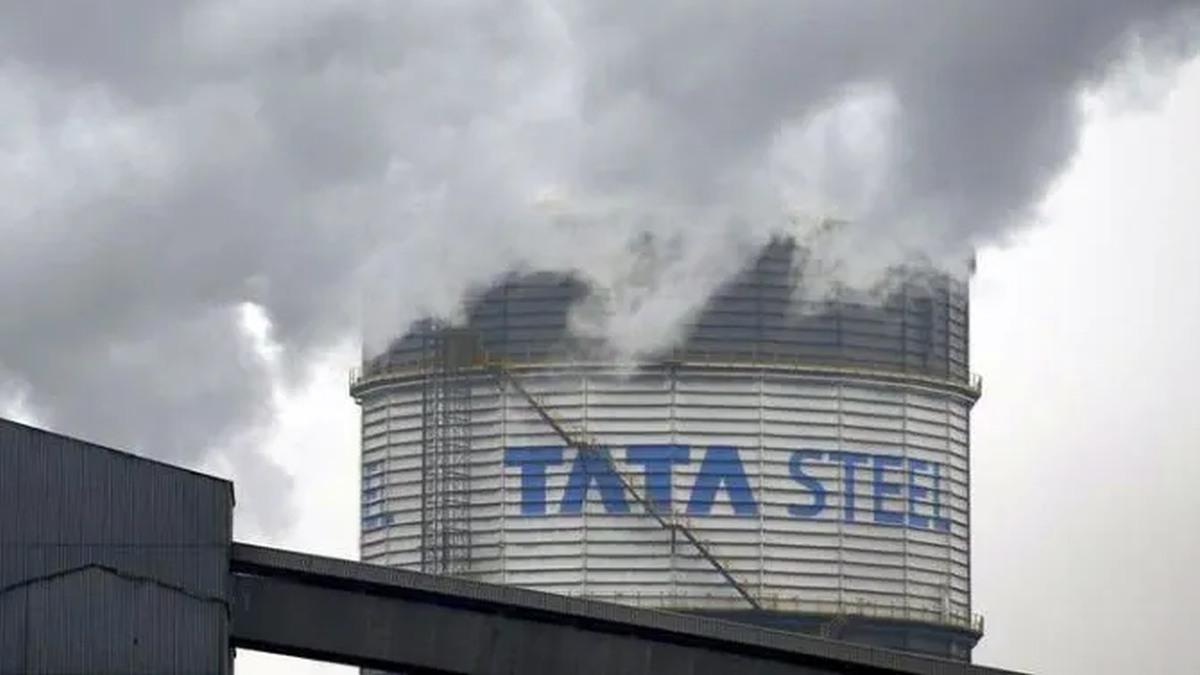
Photograph: Andrew Yates/Reuters
Key Points
- Tata Steel is well-positioned to benefit from India’s projected 8-10% steel demand growth (FY26-30) and is expanding its India capacity from 26.5 MTPA to 40 MTPA by FY31.
- The company’s cost transformation programme delivered Rs 8,600 crore in savings in M9FY26, nearing its FY26 target of Rs 11,500 crore, significantly improving operating margins.
- Favourable protectionist policies like the EU Carbon Border Adjustment Mechanism (CBAM) and UK import protection are expected to boost realisations and narrow losses in European operations.
- Tata Steel’s consolidated net debt declined to Rs 81,834 crore, with a net debt-to-operating-profit ratio of 2.59 times, well below the guided maximum of 3 times.
- The company is transitioning its UK Port Talbot plant to an electric arc furnace and considering a similar model for IJmuiden (Netherlands) to eliminate long-term structural cost disadvantages.
Tata Steel seems well placed in its key geographies.
India has a safeguard duty, the European Union (EU) Carbon Border Adjustment Mechanism (CBAM) and the UK import protection with 50 per cent tariffs.
Tata Steel’s Q3FY26 consolidated revenue came in at Rs 57,002 crore (down quarter-on-quarter or Q-o-Q versus Rs 58,689 crore in Q2FY26, and up year-on-year or Y-o-Y against Rs 53,648 crore).
Consolidated operating profit was Rs 8,309 crore (versus Rs 9,106 crore Q-o-Q) with margin at 15 per cent.
Adjusted operating profit was Rs 8,270 crore and about Rs 10,069 per tonne, while net profit was Rs 2,730 crore.
The Q3 capex was Rs 3,291 crore, taking M9FY26 capex to Rs 10,370 crore.
Financial Performance and Debt Reduction
The consolidated net debt declined to Rs 81,834 crore with net debt-to-operating-profit ratio at 2.59 times.
Operating cash flow before capex was Rs 10,345 crore.
The India Q3FY26 revenue was Rs 35,725 crore with operating profit of Rs 8,291 crore and margin at 23 per cent.
The operating profit per tonne was Rs 13,735.
The Netherlands reported Q3FY26 revenue of euro 1,354 million with operating profit of euro 55 million, while the UK reported revenue of pound 468 million with a loss of pound 63 million at the operating level.
The cost transformation programme delivered Rs 3,000 crore of savings in Q3FY26 and Rs 8,600 crore in M9FY26 against the FY26 savings target of Rs 11,500 crore.
Netherlands benefits from CBAM and safeguard tightening which could boost realisations by euro 70-100 per tonne.
UK losses have narrowed after commissioning of the 3.2 million tonne per annum (MTPA) electric arc furnace.
India Growth and European Optimisation
India realisations may improve Q-o-Q in Q4 by over Rs 2,000 per tonne, given Rs 3,000–3,500 per tonne rise in hot rolled coil (HRC) prices.
But a $15 per tonne increase in coking coal may partly offset gains.
Consolidated operating profit per tonne is projected to trend toward Rs 13,000–15,000 levels by FY28.
India’s steel demand is projected to grow by 8-10 per cent over FY26-30.
Tata Steel is expanding India capacity from 26.5 MTPA in FY25 to 40 MTPA by FY31, with annual capex commitment of Rs 16,000 crore.
In the UK, it has converted Port Talbot to electric arc furnace (EAF). It is considering a gas-based direct reduced iron and electric arc furnace model at IJmuiden (Netherlands), subject to policy clarity.
The management says working capital discipline generated free cash flow of Rs 7,054 crore.
Net debt declined Q-o-Q by Rs 5,200 crore.
The India operating profit margin was 23 per cent in Q3 despite Rs 2,100 per tonne realisation decline Q-o-Q.
The management says Q3 may have been the bottom of the cycle with HRC up in Q4 and auto contract renewals due in April.
Market Performance and Future Outlook
In India, automotive and special products delivered best-ever quarterly and 9-month volumes and auto downstream contribution is now over 50 per cent.
Digital and omnichannel initiatives like Aashiyana and DigECA recorded gross merchandise value (GMV) growth of 68 per cent Y-o-Y.
Tubes also recorded best-ever quarterly volumes post 0.3 milllion tonnes (MT) capacity addition.
Despite record sales of 6 million tonnes and Rs 890 crore in cost savings, Indian operating profit fell 5 per cent Q-o-Q as steel prices hit 5-year lows.
Net debt-to-operating-profit is well below the guided maximum 3 times ratio.
The Netherlands’ operating profit was euro 55 million at euro 39 per tonne.
Q4 realisations are guided down by euro 30–33 per tonne Q-o-Q but volumes are expected to rise by 0.4 million tonnes Q-o-Q and cost takeouts should more than offset lower pricing.
CBAM implementation may pave the way for euro 100 per tonne structural price uplift.
The UK’s loss at the operating level remained broadly stable.
The management indicated that pound 100 per tonne spread expansion is required for operating breakeven in the UK.
The 3 MTPA electric arc furnace transition may eliminate long-term structural cost disadvantages.
In India, the company is opening new reserves such as Kalamang, Koira and Gandhalpada.
A recycled steel plant in Ludhiana and a potential greenfield project in Maharashtra may reduce long-term reliance on eastern iron ore.
The 19 per cent spike in international thermal coal prices and ongoing gas shortages are concerns.
Global crude steel production in 2026 was weaker, declining 7 per cent Y-o-Y.
The long-term trends and protectionist policies in the EU, the UK and India are in favour of the company.
Provided it can maintain its carefully-structured expansion, it could exploit the steady long-term growth in India demand.
It can also be cost-effective in the Netherlands and the UK.
Disclaimer: This article is meant for information purposes only. This article and information do not constitute a distribution, an endorsement, an investment advice, an offer to buy or sell or the solicitation of an offer to buy or sell any securities/schemes or any other financial products/investment products mentioned in this article to influence the opinion or behaviour of the investors/recipients.
Any use of the information/any investment and investment related decisions of the investors/recipients are at their sole discretion and risk. Any advice herein is made on a general basis and does not take into account the specific investment objectives of the specific person or group of persons. Opinions expressed herein are subject to change without notice.