

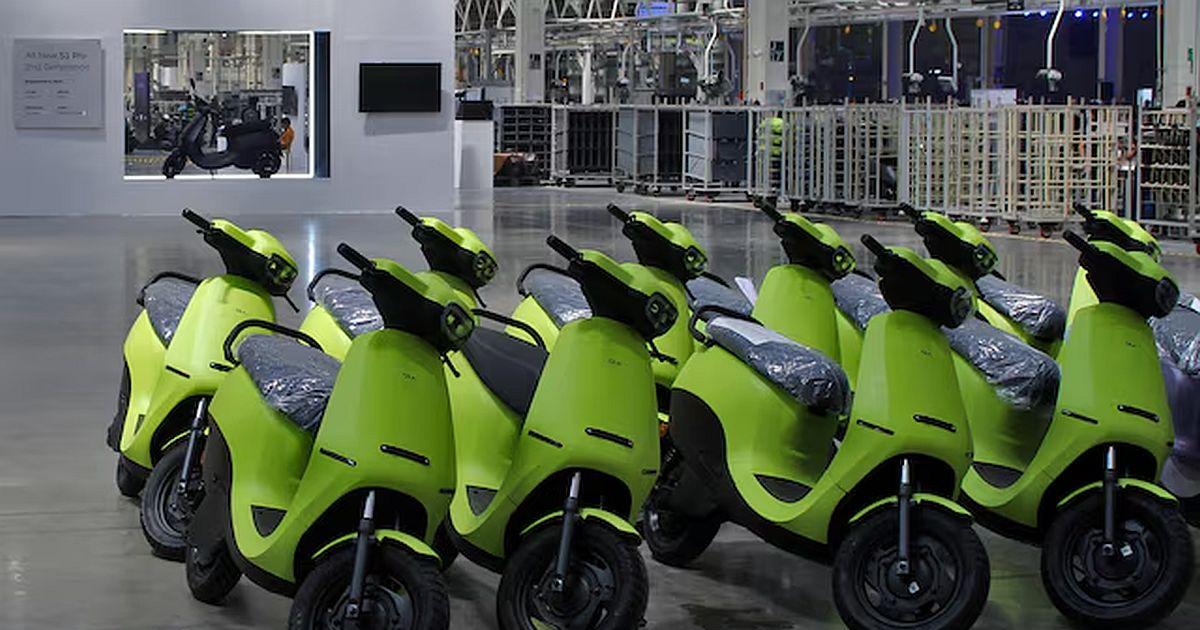
Ola Electric Mobility is redirecting a significant portion of its initial public offering funds, originally designated for research and development, towards debt repayment and growth initiatives, highlighting increasing financial pressures amidst weakening sales and stalled fundraising efforts.
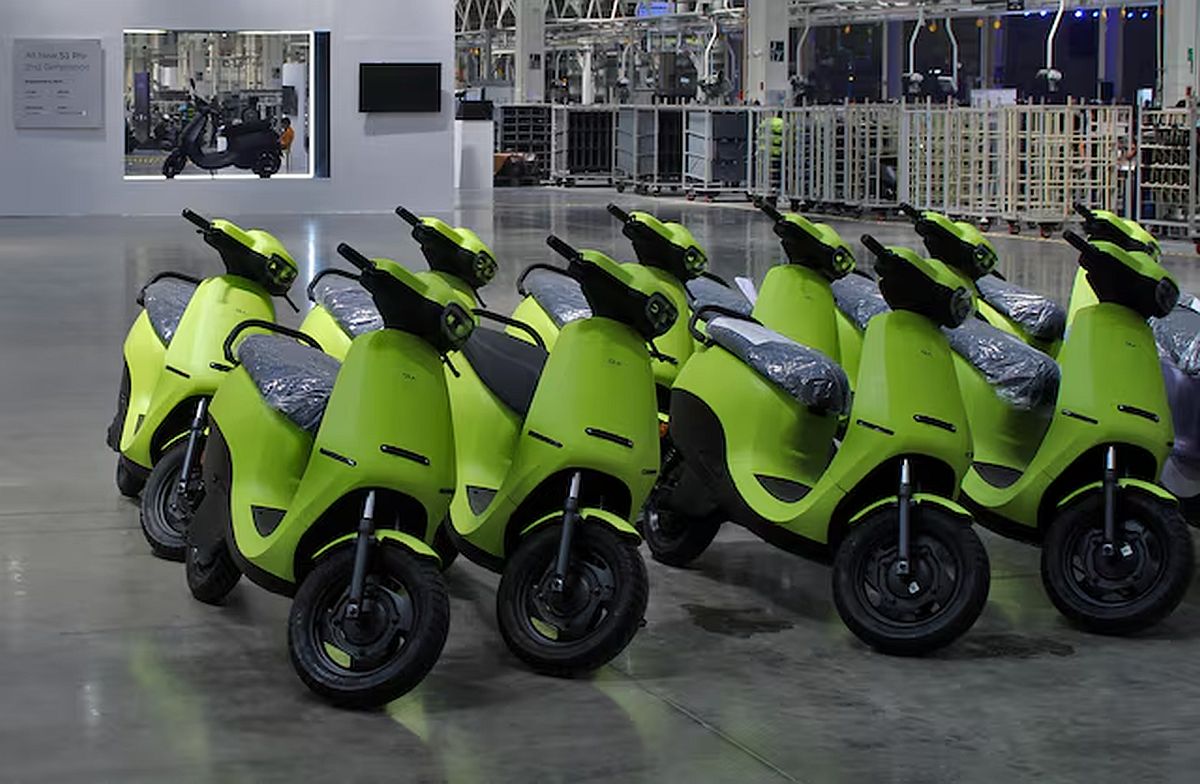
Photograph: VarunVyas Hebbalalu/Reuters
Key Points
- Ola Electric is diverting Rs 575 crore from its Rs 5,500 crore IPO proceeds, initially allocated for R&D, towards debt repayment and growth initiatives.
- The company will use Rs 475 crore for debt repayment or prepayment and Rs 100 crore for organic growth, following board approval on March 18.
- This marks the second such reallocation of IPO funds, with a similar change approved by shareholders in August last year.
- The move comes amidst weakening sales performance, loss of market share, and execution challenges for Ola Electric.
- Ola Electric’s sales volumes and market share in the electric two-wheeler segment have sharply declined, with the company slipping out of the top five in monthly sales in February.
Ola Electric Mobility Ltd is redirecting money earmarked for innovation towards debt repayment, signalling mounting pressure on the electric-vehicle maker as sales weaken and fundraising efforts stall.
The Bengaluru-based company has revised the deployment of its Rs 5,500 crore initial public offering (IPO) proceeds, diverting Rs 575 crore from its research and product development allocation toward debt repayment and growth initiatives, according to a stock exchange filing.
The board approved the proposed change in the use of IPO funds at a meeting on March 18, subject to shareholder approval.
Revised Fund Allocation
The company approved the reallocation of Rs 575 crore from the Rs 1,505 crore it had set aside for research and development (R&D) in its IPO.
About Rs 475 crore will be directed toward the repayment or prepayment of debt, while the remaining Rs 100 crore will be used to fund organic growth initiatives, the filing said.
“The company undertook a similar exercise last year and is now allocating funds again,” a person familiar with the matter said.
“The move comes at a time when it is already facing scrutiny over weak sales performance, which has made the scale of the allocation stand out.”
This marks another revision in the use of IPO proceeds by Ola Electric following a shareholder-approved reallocation in August 2025 that cut R&D spending while boosting allocations for debt repayment and organic growth.
Analyst Concerns and Market Challenges
Shriram Subramanian, the founder and managing director (MD) of InGovern Research Services, said the move by Ola Electric is “fine” in isolation, particularly if business priorities have evolved post-IPO, but flagged that this is the second such revision in the utilisation of IPO proceeds after a similar change approved by shareholders in August last year.
“At that point, they were considering a few business expansions, which are not happening now,” said Subramanian.
Analysts said the latest reallocation comes at a time when the company is grappling with slowing momentum, loss of market share, and execution challenges, prompting a sharper focus on stabilising operations. Subramanian added that the company appears to be under pressure, saying, its “entire business is going for a toss, so why will they keep spending on R&D?”
He emphasised that in the current scenario, “they have to stabilise their current business as there is no point in investing in R&D and talking about new models or new businesses.”
The shift in capital allocation, alongside signs of senior management churn, points to a more defensive strategy centred on deleveraging and consolidation rather than expansion.
The company had Rs 1,295.6 crore in unutilised IPO proceeds as of March 18, the filing said.
Declining Sales and Market Share
The proposed changes come amid a sharp decline in sales volumes and market share in the electric two-wheeler segment.
It is now led by rivals such as TVS Motor Company, Bajaj Auto, Ather Energy and Hero MotoCorp.
The company is also reportedly scaling back its retail expansion, aiming to cut its store count to about 550 by March-end, a year after outlining plans for 4,000 outlets nationwide.
It slipped out of the top five in monthly sales in February, selling about 3,968 vehicles for a 3.7 per cent market share, according to government data.