

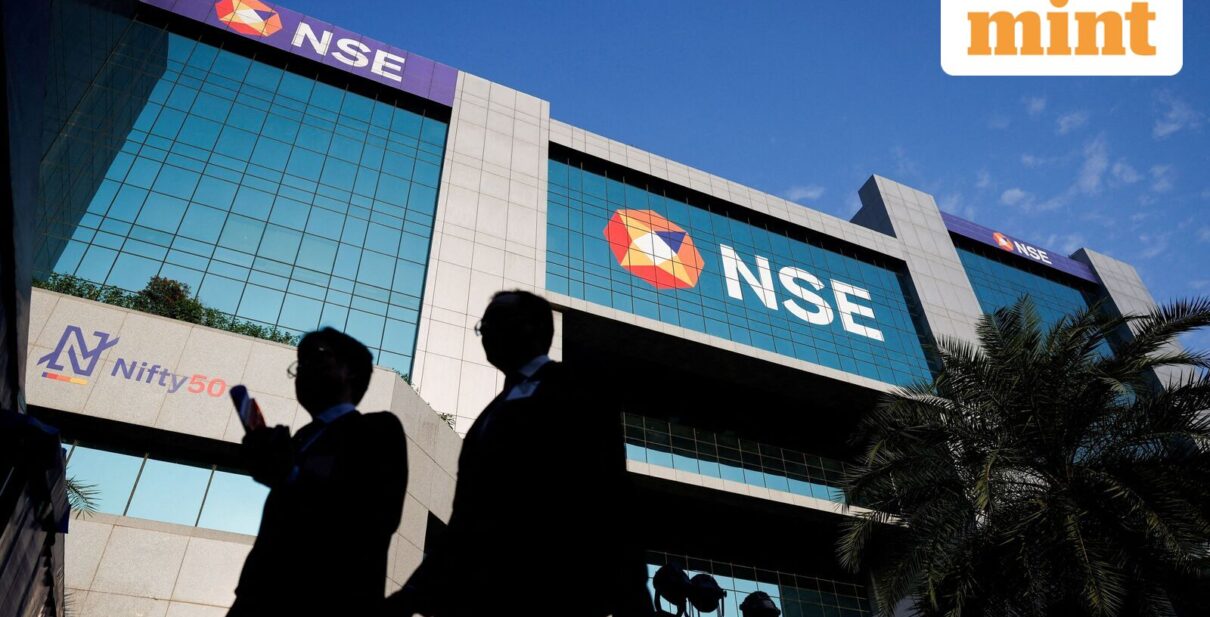
Mumbai: India’s largest stock exchange, National Stock Exchange (NSE), hopes the government will reconsider the hike in securities transaction tax (STT) on index and single-stock futures from the next fiscal year, as announced in the Budget for FY27.
“The increase in STT is seen as a negative for index and single stock futures, in particular, because futures are generally seen as genuine instruments for hedging by long-term investors,” said Sriram Krishnan, chief business development officer, while speaking at NSE’s Q3 investor call.
Index futures refer to futures contracts on indices like Nifty and Bank Nifty, while single-stock futures are derivatives on stocks like Reliance Industries, HDFC Bank, etc
They are not the instruments of choice for traders because of the cost involved in taking positions via futures, Krishnan said. “Therefore, a lot of representations are being made—we are aware of it—to the government to see if this (STT hike) can be reviewed or reconsidered. We are hopeful that some review might be undertaken on this front… the extent of the hike can be reviewed,” Krishnan added.
NSE had a 99.8% market share in equity futures as of the end of December 2025.
Asked about the likely impact on volumes of the hike, he said previous hikes from time to time hadn’t ‘really’ impacted volumes negatively, and it was possible that the market could absorb the imminent hike.
Finance minister Nirmala Sitharaman had announced a 150% hike in STT on futures sold by 5 paise per rupee, effective 1 April, from the current 2 paise on notional volumes.
For options—which attract greater trader participation—STT was increased by 50% to 15 paise per rupee from 10 paise per rupee on the seller, calculated on premium turnover (traded value), unlike futures where tax is levied on total contract or notional value.
STT on equity cash was left unchanged at 10 paise per rupee for both buyers and sellers.
The government had earlier raised STT on futures to 2 paise per rupee from a little over a paise, from October 2024, in the Budget FY25 presented on 23 July after the general election.
Futures are generally used by FPIs, retail/HNI investors, domestic institutional investors, and proprietary brokers. Retail/HNI and prop brokers generally act as counterparties to domestic institutional investors (DIIs) and foreign portfolio investors (FPIs).
In response to another question on loss of market share in index options, Ashishkumar Chauhan, managing director and CEO of NSE, said, “In terms of competition taking market share, broadly that cycle is over.”
NSE’s market share in equity options stood at 73% in the December quarter, down from 76% in the previous quarter, according to the financial highlights for investors.
Derivatives are the largest contributor to the exchange revenues.For instance, equity options (premium turnover-based) accounted for 77% of NSE’s standalone transaction fees of ₹3,006 crore in Q3, with equity futures contributing 11% and equity cash accounting for the rest.