

The power ministry proposed phasing out the monopoly in the distribution sector by allowing multiple players in the same supply area, apart from promoting public private partnership and listing distribution utilities.
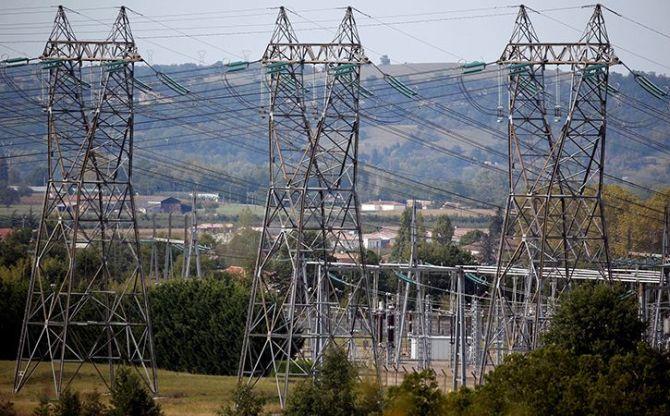
Photograph: Mukesh Gupta/Reuters
Key Points
- Tariffs are still not cost reflective and cross-subsidisation has resulted in high industrial tariffs, undermining global competitiveness of Indian industry,
- National Electricity Policy seeks to make the sector financially viable
The government on Wednesday put out the draft of a new policy that projects the country’s power sector will need Rs 50 trillion in investments by 2032 and Rs 200 trillion by 2047, proposing ambitious reforms in generation, transmission and distribution.
The National Electricity Policy (NEP) seeks to make the sector financially viable, increase per capita power consumption to 4,000 kilowatt-hour (Kwh) by 2047, and promote competition in supply, apart from increasing the share of non-fossil capacity.
“Distribution companies have accumulated losses of around Rs 6.9 trillion, and outstanding debt has reached Rs 7.18 trillion.
“Tariffs are still not cost reflective and cross-subsidisation has resulted in high industrial tariffs, undermining global competitiveness of Indian industry,” the policy said.
The power ministry proposed phasing out the monopoly in the distribution sector by allowing multiple players in the same supply area, apart from promoting public private partnership and listing distribution utilities.
“Tariff orders must be issued before the commencement of each financial year, and true-up orders for the previous financial year issued within the current financial year.
“Distribution and supply tariffs must be clearly separated. Regulatory proceedings must be concluded within 120 days,” said the policy.
The policy proposed that from FY 2026-27, state commissions must ensure that tariffs fully reflect costs without creating regulatory assets.
Tariffs must be linked to a suitable index for automatic annual revision, which operates if no tariff order is passed by the State Commission.
“Tariffs should progressively recover fixed costs through demand charges.
“Power purchase cost increases must be automatically passed through to consumers on a monthly basis. Stabilisation funds may be established to manage power purchase cost fluctuations,” the policy stated.
It also proposed that energy sector funds must be established under the National Bank for Financing Infrastructure and Development and the National Investment and Infrastructure Fund to mobilise capital for non-fossil energy infrastructure.
The power ministry said through the new policy that project bankability must be enhanced across the sector through the deployment of risk-mitigation instruments such as first-loss guarantees, reserve funds, and multilateral guarantees from multilateral development banks.