

Union Budget 2026-27 continued to push the pedal on localization in the Indian manufacturing sector, announcing a slew of measures across electronic goods, pharma, textiles, capital goods and other sectors to boost India’s production and export competitiveness.
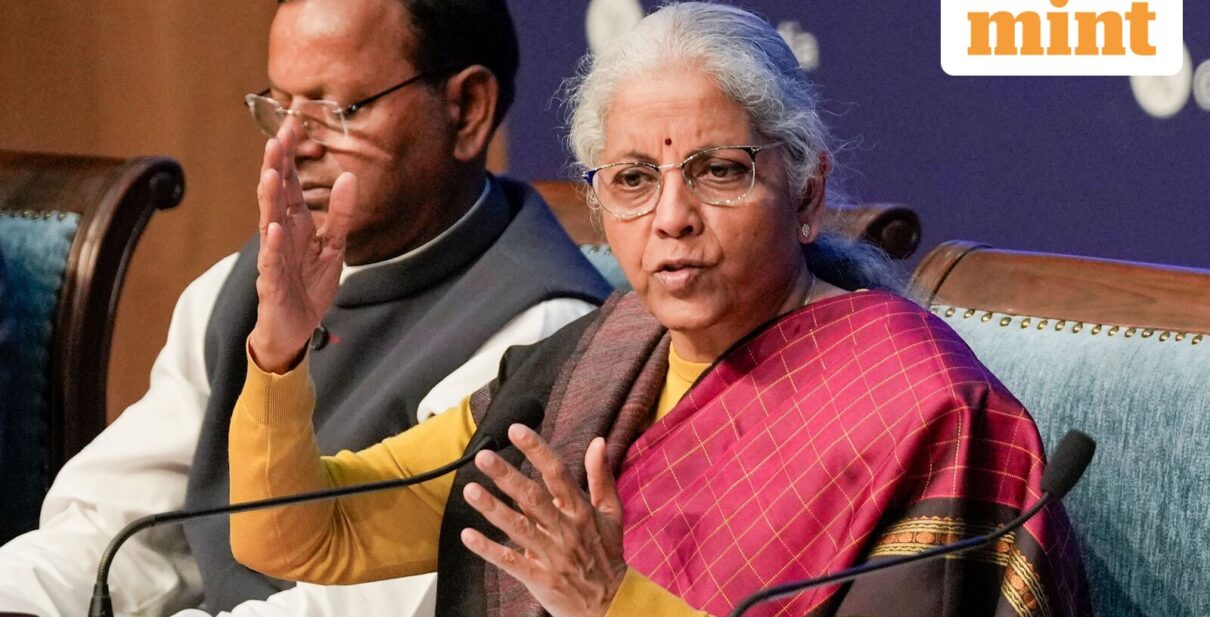
The focus on self-reliance was reflected in finance minister Nirmala Sitharaman’s speech. “Today, we face an external environment in which trade and multilateralism are imperilled and access to resources and supply chains are disrupted,” she said.
The biggest push is for the electronic goods sector, with an increase in outlay for the electronics components manufacturing scheme (ECMS) from about ₹23,000 crore to ₹40,000 crore. “This aims to build resilient supply chains and reduce reliance on imports, particularly from China,” said a report by IDBI Capital Markets & Securities Ltd.
The scheme, launched in April, aims to build domestic capability for various electronic components such as printed circuit boards (PCBs), camera modules and so on, and had received proposals worth about ₹1.1 trillion. PCBs is one of the most important sub-segments as almost 90% of India’s current requirement is met through imports. The budget proposal provides a boost to companies such as Amber Enterprises India Ltd and Kaynes Technology India Ltd, which saw their stocks rise 2-5% on the NSE on 1 February.
However, there was no mention of extending mobile production-linked incentives (PLIs) in the Budget speech, which was perhaps why shares of Dixon Technologies (India) Ltd fell more than 2% after climbing more than 5% intraday.
That apart, the government’s India Semiconductor Mission (ISM), which provides capital subsidies to for semiconductor manufacturing facilities, has seen significant success. Encouraged by this, the government launched ISM 2.0 to produce equipment and materials, design full-stack Indian intellietual property (IP), and fortify supply chains.
The Budget also proposed safe harbour to non-residents for component warehousing of electronic goods to improve ease of doing business. Safe harbour requires tax authorities to accept transfer prices set by manufacturers for international transactions without detailed scrutiny, subject to certain conditions. This helps simplify compliance and reduce transfer pricing litigation.
The finance minister also proposed a five-year tax exemption to foreign companies providing capital goods, equipment and tooling to a manufacturers of electronic goods, as well as a ₹10,000-crore outlay to build an ecosystem for biologics and biosimilars.
Biologics are advanced, high-cost therapies derived from living organisms rather than synthesized chemicals, whereas biosimilars are low-cost versions of the same with similar effectiveness. These are have drawn attention owing to their effectiveness in treating diseases such as diabetes and cancer. The proposal calls for creating more than 1,000 clinical trials sites to boost associated research & development. Despite the push, the NSE Pharma index fell marginally, dragged down by the weakness in the broader market, which was spooked by the hike in the securities transaction tax.
Fixing vulnerabilities
The finance minister also called for building domestic capability in segments with vulnerable supply chains such as critical minerals, exempting capital goods required for their processing from basic customs duty. She also proposed that certain minerals be included in Schedule XII of the Income Tax Act, which would make expenditure incurred on exploration of these minerals eligible for a tax deduction.
The capital goods sector also got a push with the establishment of tool rooms to design and test high-precision components, apart from a scheme to strengthen the manufacturing of construction and infrastructure equipment. This would fill a critical gap in domestic capability and help increase companies’ share in high-margin segments across sectors. For textiles, the finance minister proposed a scheme to modernise traditional clusters with capital support for machinery and technology upgrades.
An equity fund of ₹10,000 crore to boost capabilities of micro, small and medium enterprises (MSME) was also proposed. A mandate to central public sector enterprises to settle all payments to MSME through the TReDS (trade receivables discounting system) was aimed at improving their cash flows. More than ₹7 trillion has been made available to MSME through TReDS, the finance minister noted in her Budget speech. The proposed professional support to MSMEs, by training a cadre of ‘corporate mitras’, especially in tier-II and tier-III towns, could help them meet compliance requirements, which has been a major pain point for these companies.
Overall, the Budget buttressed India’s manufacturing focus across traditional and new-age sectors. The proposals are especially significant in the increasingly uncertain global economic environment, and could provide a cushion. “The Budget’s focus on high-value manufacturing — including semiconductors, electronics, chemicals, textiles, and rare earth magnets — strengthens India’s production base in sectors that stand to gain preferential market access under the recently announced India–EU FTA, in which over 99% of Indian exports by trade value receive preferential conditions in the EU market,” said Delano Furtado, partner, corporate practice at Trilegal.