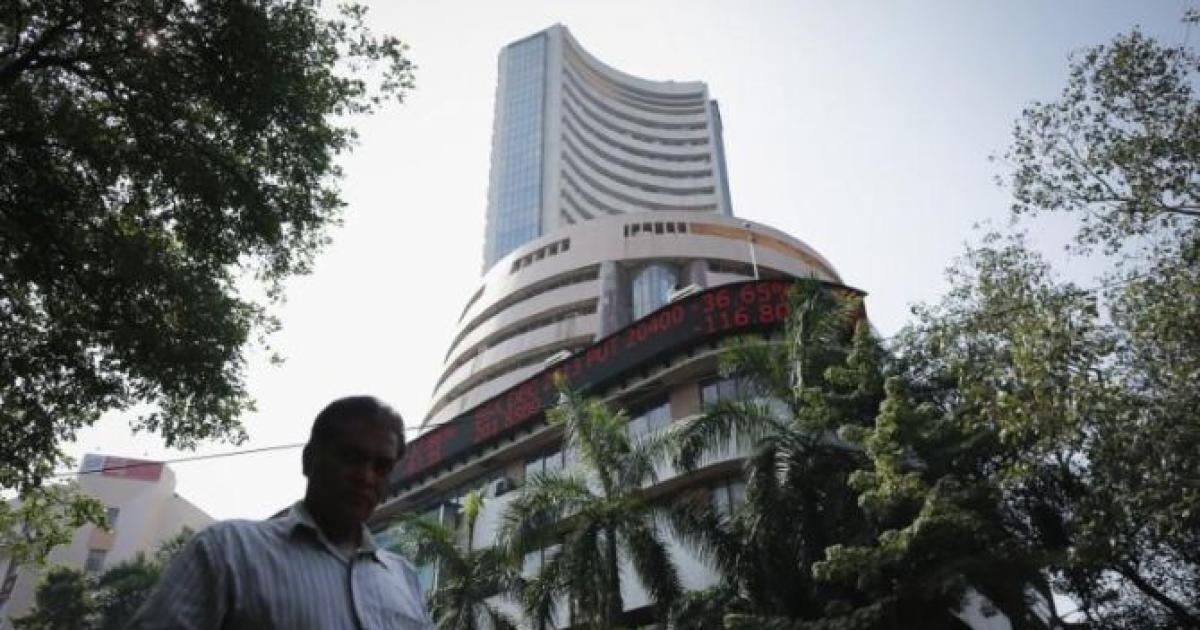


Supported by strong buoyancy in public sector capital expenditure (capex), growth in infrastructure investment is expected to accelerate in 2025-26 (FY26) compared to 2024-25 (FY25), according to the First Advance Estimates of gross domestic product (GDP) for FY26 released by the National Statistics Office (NSO) on Wednesday.
Illustration: Dominic Xavier/Rediff
Meanwhile, the narrowing rural-urban gap, prompted by low inflation, may lead to broadbased consumption demand.
NSO data shows that the share of gross fixed capital formation, a proxy for infrastructure investment, is expected to rise slightly from 29.9 per cent of GDP in FY25 to 30 per cent in FY26 in nominal terms.
Moreover, in real terms, growth in investment demand is likely to increase to 7.8 per cent in FY26 from 7.1 per cent in the previous financial year.
Paras Jasrai, associate director at India Ratings & Research, said the robust investment demand is being driven by public sector capex, which is expected to grow 29.9 per cent year-on-year in the first half of FY26.
However, a broad-based private capex cycle has yet to materialise.
“Broad-based private capex is yet to happen. Meanwhile, sectors such as power (thermal and renewable), transmission and distribution, logistics, warehousing, and commercial and retail real estate continue to show strong capex momentum,” he added.
Dharmakirti Joshi, chief economist at Crisil, said the agency expects the government to maintain capex growth at a moderate pace in the forthcoming Budget.
“Recently, the government has been advancing domestic reforms, including deregulation, to improve the business climate and enhance the economy’s long-term growth potential.
“These measures could positively impact private investments, which are beginning to show some signs of improvement,” he added.
Similarly, the share of private final consumption expenditure in GDP, a proxy for household consumption, is expected to rise by 10 basis points from 61.4 per cent in FY25 to 61.5 per cent in FY26 in nominal terms.
However, private spending growth is projected to slow to 7 per cent in FY26 from 7.2 per cent in FY25 in real terms.
“Key factors supporting strong consumption demand include robust services growth, low inflation leading to positive real wage growth, the income-tax cut announced in the FY26 Budget, and goods and services tax rationalisation.
“Trends in automobile sales and air passenger traffic also point to sustained consumption demand in the economy,” Jasrai said.
The share of government final consumption expenditure (GFCE) in GDP, which reflects revenue expenditure, is expected to fall slightly to 9.9 per cent in FY26 from 10 per cent in FY25 in nominal terms.
However, in real terms, GFCE is expected to pick up the pace, growing 5.2 per cent in FY26 from 2.3 per cent in FY25, largely led by state governments.