

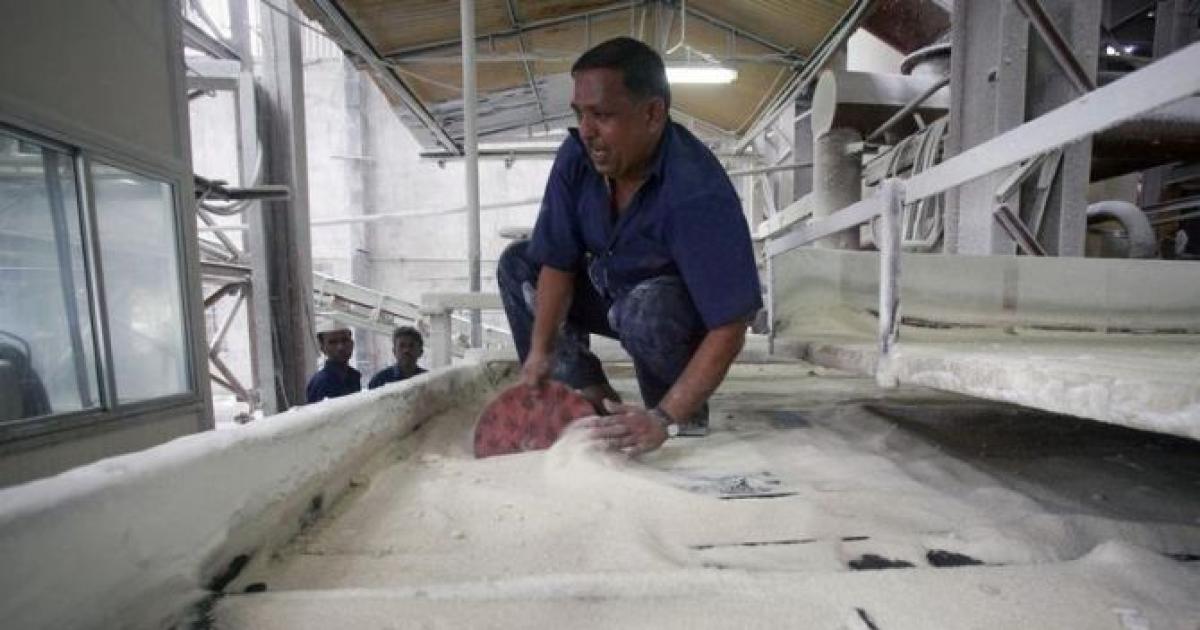
India is bracing for a significant drop in sugar consumption, projected to fall by 400,000 tonnes in the 2025-26 season, primarily driven by the ongoing liquefied petroleum gas (LPG) shortage linked to the West Asia conflict and unseasonably cool weather.
Photograph: Vivek Prakash/Reuters
Key Points
- India’s sugar consumption is expected to decrease by 400,000 tonnes to 27.7 million tonnes in the 2025-26 season, attributed to the LPG shortage and cooler March temperatures.
- The West Asia conflict has escalated the LPG crisis, impacting sugar despatches, particularly since March.
- The government has ruled out banning sugar exports and is considering increasing the minimum selling price of sugar.
- Despite approved sugar export quotas, meeting the full 1.5 million tonnes target is challenging due to international price parity issues.
- The LPG shortage has also led to a nearly 9 per cent decline in edible oil imports in March, as eateries reduce usage.
India’s sugar consumption is projected to fall by nearly 400,000 tonnes to 27.7 million tonnes (mt) in the 2025-26 season, driven by the liquefied petroleum gas (LPG) shortage linked to the West Asia conflict and a cooler-than-usual March, said Deepak Ballani, director general of the Indian Sugar and Bio-energy Manufacturers Association (Isma).
“Between October 2025 and February 2026, sugar despatches were higher by around 60,000 tonnes compared with the same period last year.
“However, the situation shifted as the West Asia conflict escalated in March,” Ballani said on the sidelines of the ISMA Sugar NXT 2026 conference on Tuesday. Consumption stood at 28.1 mt in the 2024-25 season.
Government Stance on Sugar Exports and Prices
Meanwhile, Food Secretary Sanjeev Chopra, who was also present at the conference, ruled out any proposal to ban sugar exports to boost domestic supply.
He added that the government is considering the industry’s demand to increase the minimum selling price of sugar.
“Regarding sugar exports, the government has approved the export of around 1.5 mt.
“Some quantities have been contracted, but parity with international prices remains an issue.
“However, since the West Asia crisis, there has been some improvement in global pricing.
“Nonetheless, I think meeting the full approved quota will be a challenge. If exports do not happen, that quantity will remain as closing stock, which will then give the industry flexibility to push more sugar toward the ethanol blending programme,” Chopra said.
He said sugar prices remained stable and were unlikely to rise due to adequate domestic supply.
Chopra also said the government had set up a committee of officials to consider ways to utilise surplus ethanol manufacturing capacity, including increasing the blending of ethanol with petrol beyond the current 20 per cent target.
Ethanol Utilisation and Edible Oil Imports
Chopra said the government was also favourably considering another demand from the sugar sector: using ethanol-based stoves to provide another avenue for utilising the surplus capacity. He also said there was no proposal to reduce import duties on edible oils.
Isma has revised down its net sugar production estimate from 29.2 mt to 28.5 mt due to lower recovery rates.
The government has also reduced its production estimate for the 2026-27 season.
The drop in demand has not only impacted sugar.
According to Reuters, edible oil consumption has also declined amid the LPG shortage. B V Mehta, executive director of the Solvent Extractors’ Association of India, said edible oil imports fell nearly 9 per cent in March to 1.2 mt from the previous month, as roadside eateries and restaurants cut usage due to the LPG shortage.