

‘Refiners may soon be forced to adjust operations, curtailing runs as product exports stall and directing output solely to domestic markets.’

IMAGE: An LPG gas tanker at anchor as traffic is down in the Strait of Hormuz, amid the US-Israeli conflict with Iran, in Shinas, Oman, March 11, 2026. Photograph: Benoit Tessier/File Photo/Reuters
Key Points
- Up to 2 million barrels per day of Gulf refining capacity is at risk due to escalating Middle East conflict.
- India imports about 65% of its LPG consumption, with 80% sourced from Middle Eastern suppliers.
- Closure of the Strait of Hormuz could force Gulf refiners to cut operations and redirect output to domestic markets.
- Bahrain and Kuwait face the highest risk as their refining systems rely entirely on exports through Hormuz.
- Energy infrastructure disruptions have already occurred in Qatar, Kuwait, Saudi Arabia, and the UAE during the conflict.
The ongoing conflict in the Middle East has put up to 2 million barrels per day (mbpd) of Gulf refining capacity under threat, according to Norway-based energy research firm Rystad Energy.
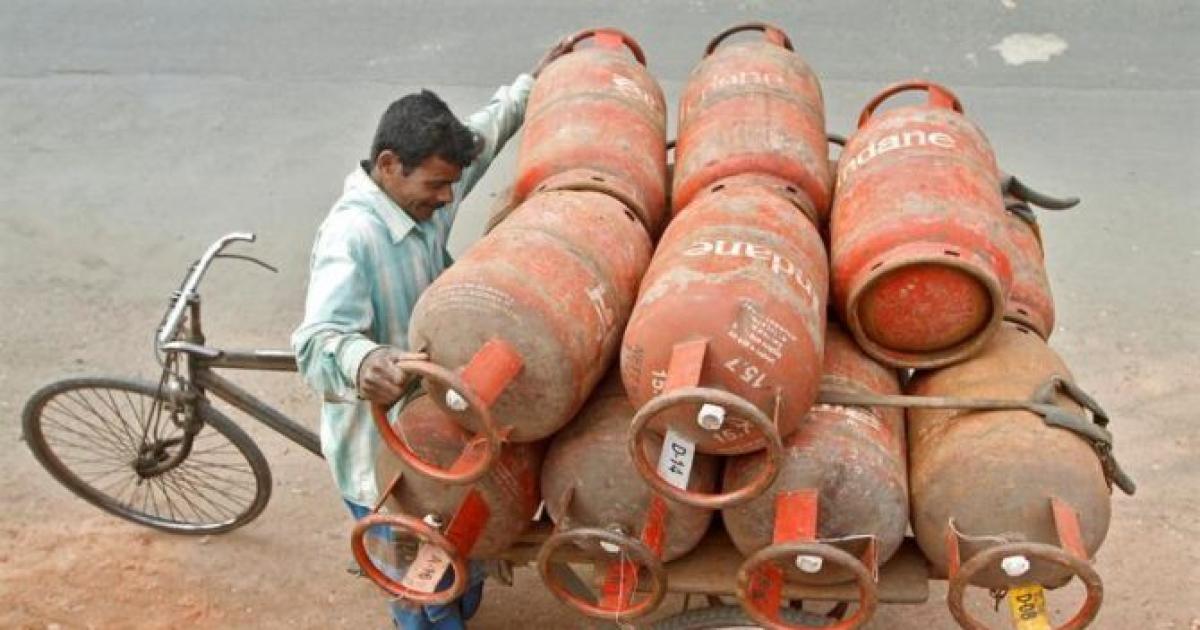
India imports 65 per cent of its total LPG consumption, with 80 per cent of those imports sourced from Middle Eastern nations like Qatar, Saudi Arabia, and the UAE.
These shipments transit through the Strait of Hormuz, making India’s supply sensitive to regional geopolitical tensions.
‘As the Strait of Hormuz remains closed in the wake of the US-Iran military escalation, Gulf countries’ oil inventory levels are reaching maximum capacity, posing serious challenges for regionally based refiners,’ Rystad Energy said in a report.
‘Refiners may soon be forced to adjust operations, curtailing runs as product exports stall and directing output solely to domestic markets.’
It added that as of now, Bahrain and Kuwait face the highest operational risk due to their export-dependent refining systems that offer zero alternative routes.
Gulf Refiners Face Operational Pressure
“Production shut-ins and refining cuts will likely continue across the region as the war rages on, threatening 2 mbpd of global oil supply if the strait remains impassable for the next six weeks,” said Pankaj Srivastava, Senior Vice President, Commodity Markets – Oil at Rystad Energy.
Three key factors, Srivastava explained, will determine the resilience of refining systems across the Gulf — bypassing the Strait through alternate export routes, the balance of domestic product demand and refining capacity and product exports as a ratio of current refinery runs.
Qatar, UAE Facilities Hit By Attacks
Most impacts since the start of the conflict have been precautionary or limited in scope.
Mina Al Ahmadi in Kuwait remained operational after debris damage, while Saudi Arabia’s Ras Tanura — already offline for scheduled maintenance that began the last week of January — extended its outage window following drone attacks and a debris-related fire.
The most significant operational curtailments were in Qatar, where LNG production ceased at Ras Laffan and Mesaieed, according to Rystad.
In the UAE, drones caused a fire at Fujairah storage tanks and ADNOC’s Ruwais complex.
Although the unit struck has not been disclosed, reports indicate the Ruwais West refinery was taken offline as a precaution, with no injuries.
Feature Presentation: Ashish Narsale/Rediff