

Both countries commit to provide each other preferential market access in sectors of respective interest on a sustained basis.
Illustration: Dominic Xavier/Rediff.com
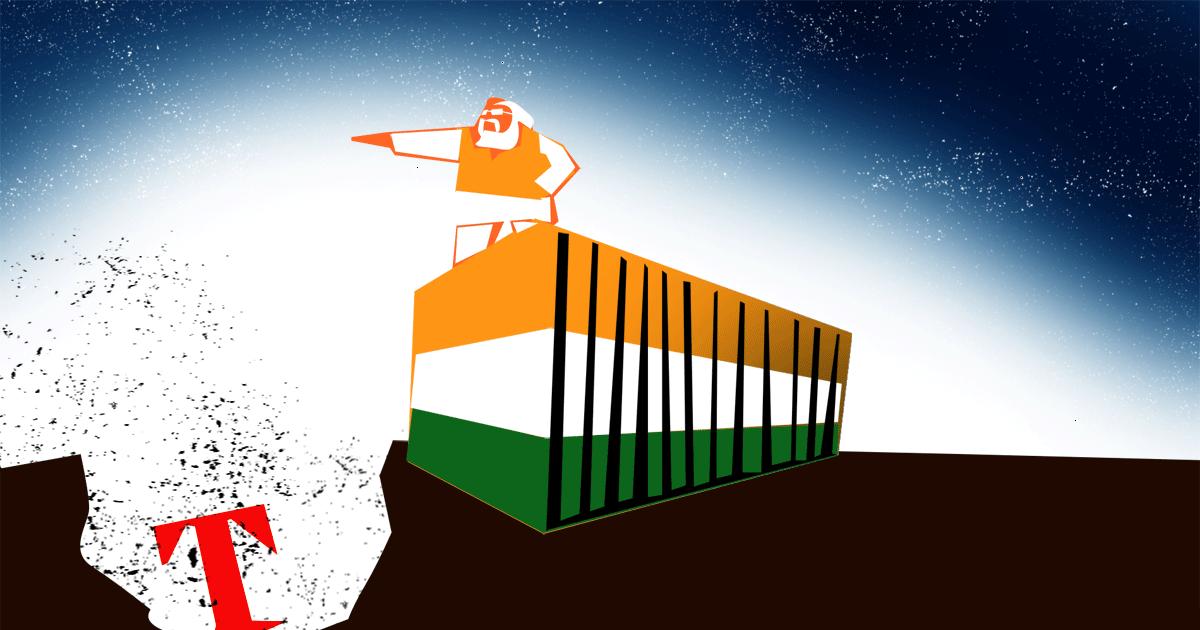
The following are the key highlights of a framework that India has reached for an interim trade agreement with the US. Both countries have issued a joint statement in this regard.
- US cuts tariffs on India to 18 per cent from 50 per cent earlier
- This will open a USD 30 trillion market for Indian exporters, especially MSMEs, farmers and fishermen
- The increase in exports will create lakhs of new job opportunities for our women and youth
- As part of this framework, the US will slash reciprocal tariffs on Indian goods to 18 per cent
Key Points
- US to slash reciprocal tariffs to 18 pc
- Zero tariff on generic pharma, gems and diamonds
- India to buy $500 bn of US energy products
- The framework will provide a huge market opportunity in key sectors such as textiles and apparel, leather and footwear, plastic and rubber products, organic chemicals, home decor, artisanal products and select machinery
- Tariffs will go down to zero on a wide range of goods, including generic pharmaceuticals, gems and diamonds, and aircraft parts
- India will get exemptions under Section 232 on aircraft parts, tariff rate quota on auto parts and negotiated outcomes on generic pharmaceuticals
- India completely protects sensitive agri and dairy products, including maize, wheat, rice, soya, poultry, milk, cheese, ethanol (fuel), tobacco, certain vegetables and meat
- India to eliminate or reduce tariffs on all US industrial goods and a wide range of US food and agricultural products, including dried distillers’ grains, red sorghum for animal feed, tree nuts, fresh and processed fruit, soybean oil, wine and spirits, and additional products
- Both countries commit to provide each other preferential market access in sectors of respective interest on a sustained basis
- The two will establish rules of origin that ensure that the benefits of the agreement accrue predominately to US and India
- The US and India will address non-tariff barriers that affect bilateral trade
- India agrees to address long-standing barriers to the trade in US medical devices; eliminate restrictive import licensing procedures that delay market access for, or impose quantitative restrictions on, US Information and Communication Technology goods
- US and India intend to discuss their respective standards and conformity assessment procedures for mutually agreed sectors
- In the event of any changes to the agreed upon tariffs of either country, US and India agree that the other country may modify its commitments
- The two will work towards further expanding market access opportunities through negotiations under the bilateral trade agreement
- US and India agree to strengthen economic security alignment to enhance supply chain resilience and innovation through complementary actions to address non-market policies of third parties
- India intends to purchase USD 500 billion of US energy products, aircraft and aircraft parts, precious metals, technology products and coking coal over the next five years
- India and US will significantly increase trade in technology products, including Graphics Processing Units and other goods used in data centres, and expand joint technology cooperation
- US and India commit to address discriminatory or burdensome practices and other barriers to digital trade
- US and India will promptly implement this framework and work towards finalising the interim agreement with a view to concluding a mutually beneficial bilateral trade agreement