

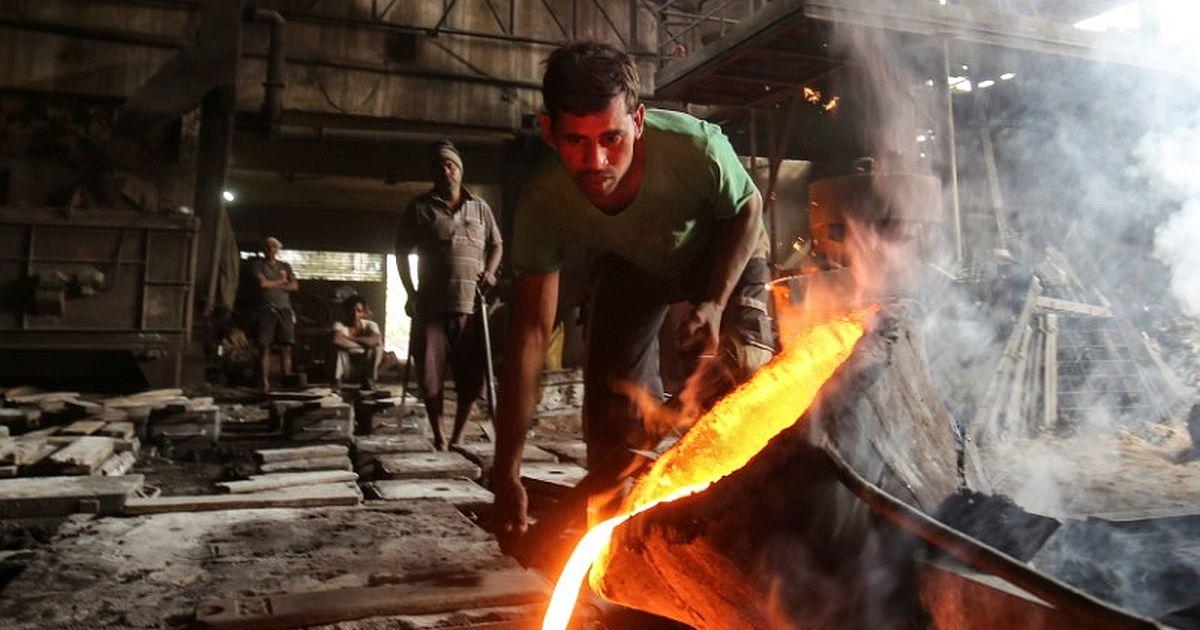
Respondents mentioned global and geopolitical factors such as tariffs, trade restrictions, and economic uncertainty along with operational issues like labour availability, raw material shortages, and regulatory challenges as some of the challenges faced in expanding capacity.

Photograph: Amit Dave/Reuters
Key Points
-
The eight manufacturing sectors surveyed include automotive components, capital goods, chemicals, fertilisers & pharmaceuticals, electronics & electricals, machine tools, metal & metal products, textiles, apparels & technical textiles, and miscellaneous
-
Higher raw material costs, currency depreciation, and increased logistics, power, and utility costs are the primary reasons for an uptick in cost.
-
38 per cent are looking at hiring an additional workforce in the next three months
The quarterly manufacturing index by the industry body Federation of Indian Chambers of Commerce & Industry (Ficci) rose to an all-time high in the third quarter of financial year 2025-26 (Q3FY26), with 91 per cent of respondents reporting either higher or same production levels, against 87 per cent in the previous quarter.
This was the 86th edition of the industry body’s Quarterly Survey on Manufacturing (QSM), which assesses performance and sentiments for manufacturers in eight major sectors.
These sectors include automotive components, capital goods, chemicals, fertilisers & pharmaceuticals, electronics & electricals, machine tools, metal & metal products, textiles, apparels & technical textiles, and miscellaneous.
“Ficci’s latest manufacturing survey continues to reflect sustained growth and increasing optimism for India’s manufacturing sector.
“This optimism is also evident in domestic demand, as 86 per cent of respondents anticipated higher or the same orders in Q3FY26 compared to the previous quarter and more so after the latest GST rate cuts announced,” said the survey.
The existing average capacity utilisation in manufacturing firms is close to 75 per cent, according to the survey.
Challenges facing India’s manufacturing sector
Respondents mentioned global and geopolitical factors such as tariffs, trade restrictions, and economic uncertainty along with operational issues like labour availability, raw material shortages, and regulatory challenges as some of the challenges faced in expanding capacity.
Around 83 per cent of respondents expect higher or the same level of inventory in Q3FY26, lower than Q2 wherein 90 per cent of respondents reported higher or same level of inventory.
The survey draws responses from both large companies and small and medium enterprises, with a combined annual turnover exceeding Rs 3 trillion.
How exports of manufacturing goods likely to fare
As of exports, about 70 per cent of respondents expect their exports to be higher or the same as compared to previous year’s similar quarters.
“Production costs for manufacturers in this quarter seem to remain on the higher side.
“Nearly 57 per cent of respondents reported an increase in the cost of production as a percentage of sales, which is consistent with the previous quarter’s findings, indicating that costs are still on the higher side.”
Higher raw material costs, currency depreciation, and increased logistics, power, and utility costs are the primary reasons for an uptick in cost.
Is there enough skilled workforce?
While 80 per cent of respondents said they are not facing any shortage of workforce availability, 20 per cent feel that there is still a lack of skilled workforce available in their sectors, calling for a need for both the government and industry to step up skilling efforts.
With respect to employment, 38 per cent are looking at hiring an additional workforce in the next three months as compared to 35 per cent in the same quarter last year.
Of the eight sectors surveyed, six of them expect moderate growth in Q3FY26, while electronics and electricals expect strong growth and the miscellaneous category had an expectation of strong to moderate growth.