


Brazil Potash CEO Matt Simpson warns that the ongoing West Asia conflict, coupled with the Russia-Ukraine war, could trigger a global food crisis by impacting fertiliser supplies and planting seasons in Europe and North America, urging countries to rethink global supply chains and foster long-term trade partnerships.
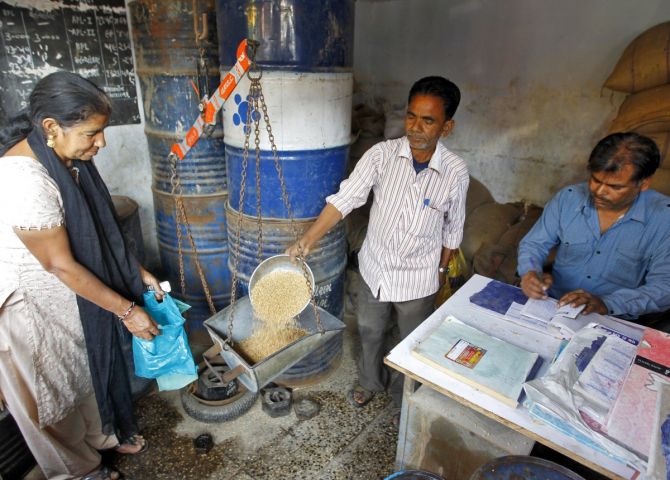
IMAGE: A women collect her ration from a government-run ration shop in Ahmedabad. Photograph: Amit Dave/Reuters
Key Points
- Matt Simpson, CEO of Brazil Potash, warns of a potential global food crisis if the West Asia conflict continues until the end of April, impacting planting seasons in Europe and North America.
- The ongoing conflicts in West Asia and Russia/Ukraine expose nearly half of the world’s fertiliser supply to geopolitical instability, affecting key inputs like sulphur, urea, and potash.
- Reduced fertiliser application rates by farmers due to higher prices and limited availability will lead to lower crop yields, impacting food availability and prices globally.
- Countries, especially importers like India, face difficult decisions regarding fertiliser affordability, highlighting the fragility of the current food supply system.
- Simpson advocates for ‘selective globalisation’ and long-term trade partnerships to diversify fertiliser supply chains, suggesting countries like India incentivise production in resource-rich nations like Brazil.
Global fertiliser rates have jumped due to the crisis in West Asia. In addition, supplies of liquefied natural gas (LNG), the main ingredient in making urea, are running short.
In a virtual interview with Sanjeeb Mukherjee/Business Standard, Matt Simpson, CEO of Brazil Potash, said that the world might face a food crisis if the war continued till the end of April, as it could have a dramatic impact on planting in Europe and North America.
Simpson, the top officer of Brazil Potash, which is engaged in exploration and development of potash (one of the main plant nutrients) in Brazil, said to tide over crises like the Iran-Israel war, countries should look at long-term trade partnerships where one country, say India, incentivises production of fertilisers in another, say Brazil, and in return gets an assured supply of surplus agricultural goods like soybeans, etc.
Given that we are facing a lot of turbulence the world over due to the West Asia crisis, how do you see the fertiliser markets moving from here onwards?
Well, all depends on what happens, not only with the war in West Asia, but also in Russia’s war with Ukraine, because we have almost half of the world’s fertiliser now exposed to global conflicts.
So, when you look at just West Asia, you have about half of the world’s sulphur, which is a key input to make the phosphate fertiliser. You have about 40-45 per cent of urea, which is key for nitrogen, and about 10 per cent of potash just in West Asia.
And if we now layer it on what’s going on in Russia and Ukraine, you have almost 50 per cent of the world’s potash in countries that are sanctioned or at war. And, it’s a huge issue, although everyone right now is talking about gas prices, especially in North America.
What they’re not realising is that if this war continues even for just another month, it could have a dramatic impact on the planting season in Europe and North America, which will mean that later this year, there’s going to be a food crisis.
Impact on Planting Seasons and Food Security
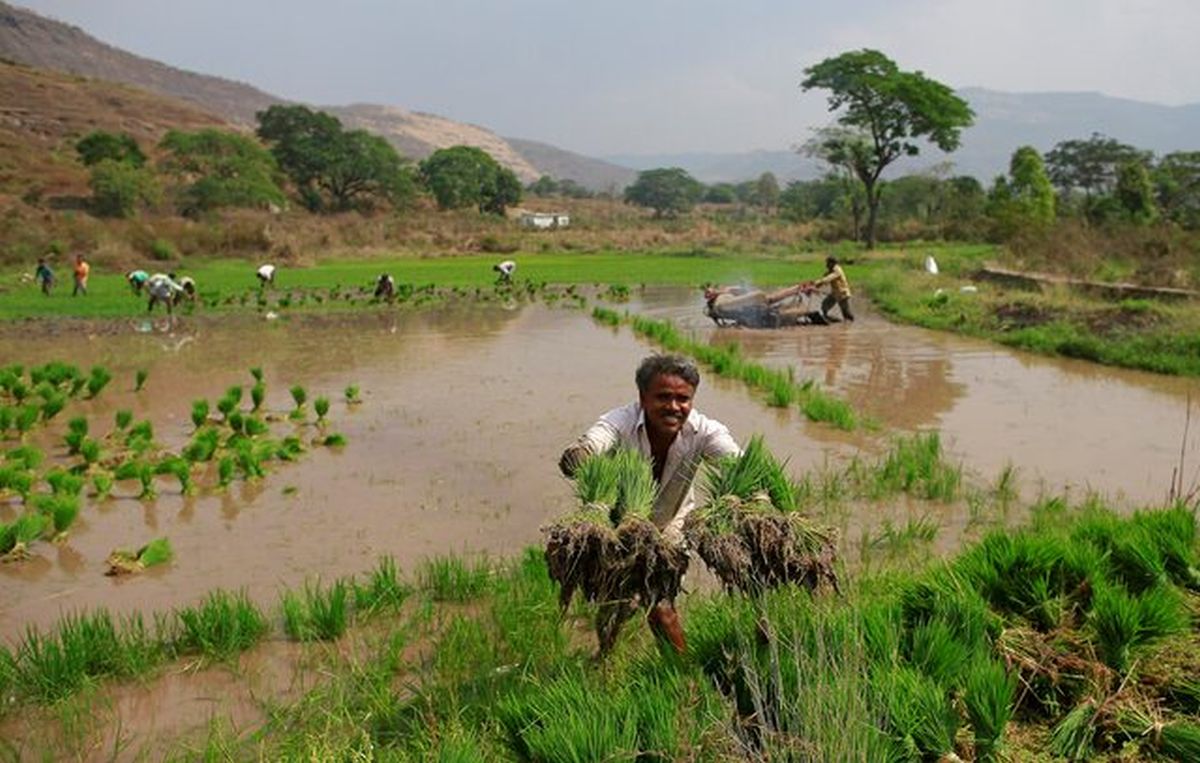
Photograph: Danish Siddiqui/Reuters
So, you’re saying, if the war continues even for a month, it will have a terrible impact on the planting season in Europe and North America?
Yes, I mean, the combination of lack of availability with much higher prices is going to force farmers to reduce application rates of fertiliser, and if they reduce application rates, then it will have an impact on the amount of crops that are grown, which then impacts availability of food and the prices of food later on.
If the war continues in April, what impact do you see for countries in Asia, particularly for India, which are big importers of both nitrogen and phosphatic fertilisers?
It’s going to mean that farmers are put in a very difficult situation where they have to make a decision on how much fertiliser they can afford to apply to optimise how much they grow profitably.
So, I think, it really exposes just how fragile our food supply system is today, where people, at times, just look at supply versus demand, and don’t always factor in… where our supply comes from.
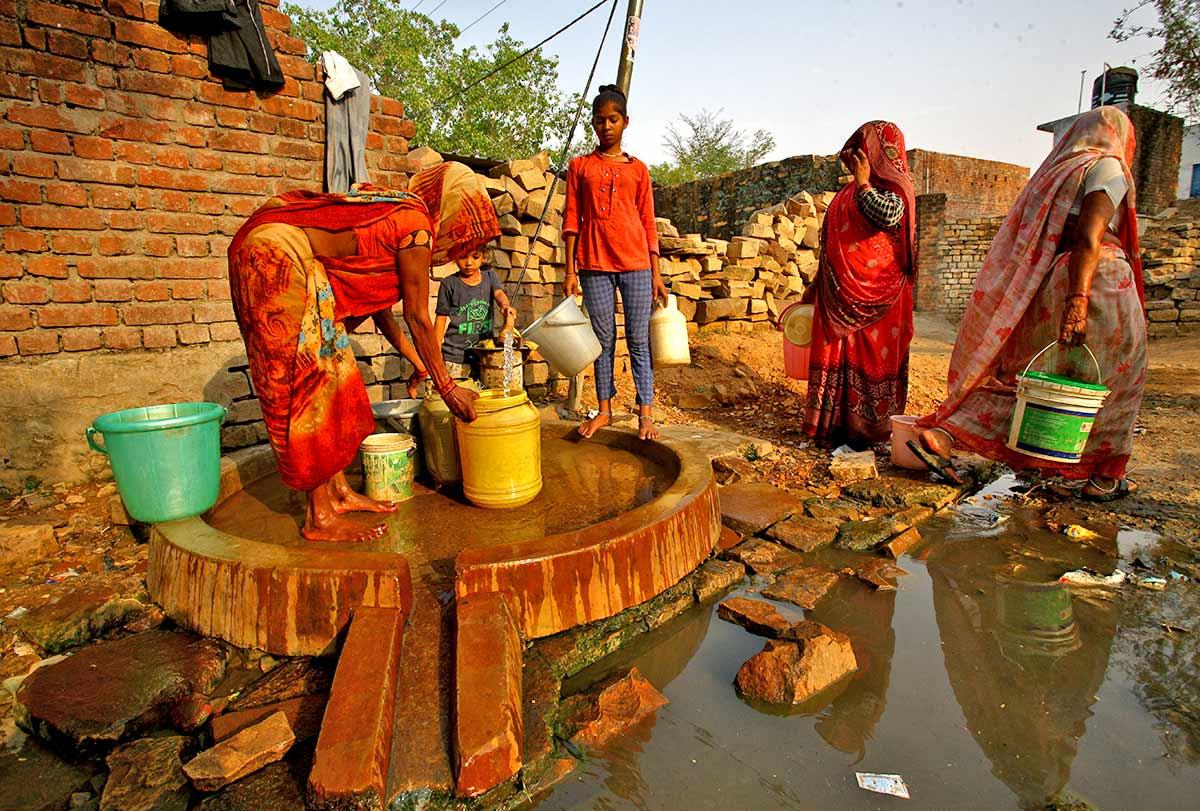
Image used only for representation. Photograph: Ritesh Shukla/Reuters
Lessons from Global Crises and Supply Chain Diversification
What lessons should the world learn from such crises as far as critical agriculture inputs are concerned? How should we move forward now that we have faced two crises back to back?
Well, I think this is a real eye-opener to the concept of selective globalisation.
And, what I mean by that is in economics class, a lot of people are taught this concept called globalisation, where goods and services should be made in the country that can provide it at the lowest cost.
While that theory works really well when we have reliable suppliers, it doesn’t factor in some of these crazy geopolitical events, or things like Covid, that are completely unexpected. And when these unexpected things happen, we realise that there are certain goods and services — which are absolutely essential for our survival or for our economy — that should be produced domestically.
And when you do have that possibility, you should 100 per cent be doing it (produce locally) to protect your people and your economy.
So, I’d say there’s a lot of focus especially on things like rare earth metals.
These days, people are really focused on technology applications, but what they are not focused on enough is ensuring our food supply.
At the beginning of the discussion, you mentioned that 50-55 per cent of crop nutrients come from Russia, Belarus as well as West Asia. So, does this crisis nudge countries to go for indigenous production? But many countries like India have limited raw material that goes into making inputs like fertilisers…
Yeah, definitely. I mean where you don’t have the ability to produce domestically, I think you need to look to other countries that do have that capability to diversify your supply.
And what better example than potash, today 80 per cent of the world’s potash is produced in just three countries — Canada, Russia and Belarus.
It’s an oligopoly, and Brazil has potentially the second-largest basin of potash in the world, but yet it only produces about 350,000 tonnes in a 65 million tonnes per year market.
So, it’s absolutely crazy that this basin in Brazil is not in production… It can make Brazil a fourth major supplier of potash that’s outside of conflict regions.
It gives us an option outside of those three countries to have a large scalable supply.
People might be very comfortable with Canada as a trade partner.
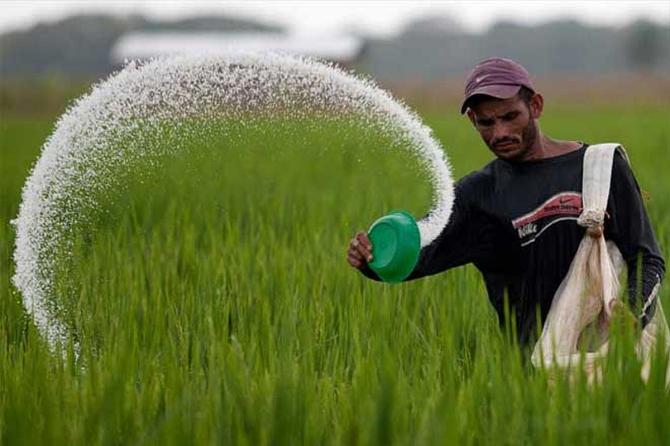
Photograph: Amit Dave/Reuters
The Role of Organic Fertilisers
So, you are suggesting wherever possible countries should be moving towards building more long-term partnerships in commodities…
Exactly, it’s better to diversify your supply chains.
But that can only really help if you deal with the key inputs to begin with, because that’s where it all starts.
So, if you have the ability to produce more domestically, you should, but where you can’t, you need to look to other countries.
Is this crisis an opportunity to scale up the use of organic fertilisers to reduce reliance on chemical fertilisers?
Look, I think the whole organic side is an important part of the equation, and that works well on smaller scale farming.
But when you get to large commercial scale, it really isn’t an alternative to chemical fertilisers at this point.
So, you know, it could be part of the equation, but we haven’t come anywhere close to being able to completely substitute chemical fertilisers with organic ones.